Best Solar New Year Celebrations in Australia for Indian Communities in 2026
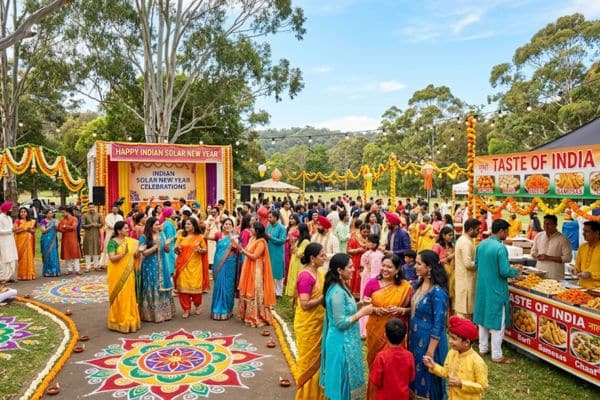
Most Australians will have no idea that mid-April is effectively New Year’s Day for a large chunk of the country’s Indian population. But walk through Harris Park in Sydney or Dandenong in Melbourne around 13 to 15 April, and you’ll figure it out pretty quickly.
The smell of fresh jasmine garlands, the sound of dhol drums, and the queues outside South Indian restaurants that stretch around the block tell you everything. The Solar New Year has arrived.
One Weekend, Five New Years: What's Actually Happening in April 2026
Unlike the Gregorian calendar, traditional Indian solar calendars are tied to the sun’s movement through the zodiac. When the sun enters Aries (Mesha Sankranti), it triggers the New Year across multiple regional traditions almost simultaneously.
In 2026, that cluster lands around 13 to 15 April, and it covers:
- Baisakhi (Punjabi Solar New Year) on 14 April
- Puthandu (Tamil New Year) on 14 April
- Vishu (Kerala’s New Year) on 14 April
- Pohela Boishakh (Bengali New Year) on 14 or 15 April
- Bihu (Assamese New Year) on 14 April
For communities that live by these calendars, this isn’t a cultural performance for others’ benefit. It’s genuinely the new year. In Australia, with a large Indian-born population, the celebration has now grown considerably over the past two decades.
Baisakhi in Melbourne and Sydney: Where the Big Events Actually Are
Melbourne's Nagar Kirtan Tradition
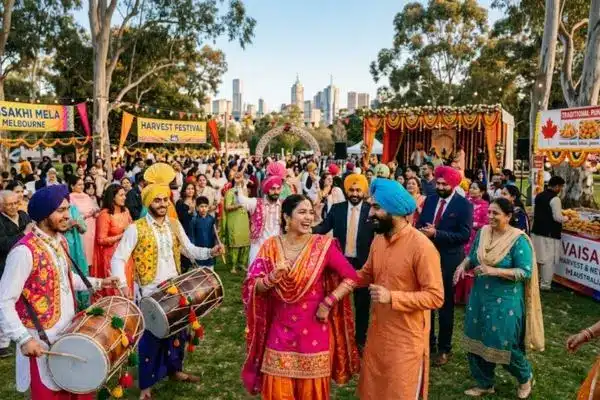
Melbourne has well-established Baisakhi celebrations, with multiple Gurdwaras across the city organising events. Gurdwara Sahib Tarneit and Sri Guru Singh Sabha in Craigieburn are among the most active.
The Tarneit Gurdwara has previously organised a nagar kirtan for Vaisakhi. If you want to attend in 2026, contact the Gurdwara directly from late February. Routes are confirmed only a few weeks out, and mainstream event sites usually miss this entirely.
The langar (community meal) served at Gurdwaras on Baisakhi is open to everyone regardless of faith or background. There’s no entry charge, the food is fully vegetarian, and you cover your head with a scarf at the door. That’s genuinely the full entry requirement.
Tip For First-Timers Nervous About Getting It Wrong:
A real fear for many people walking into a Gurdwara for the first time is doing something accidentally disrespectful. The rules are actually very simple: remove your shoes before entering, cover your head with any scarf, and don’t bring non-vegetarian food on the premises. You don’t need to participate in any ritual unless you want to. We’ve seen visitors from all backgrounds welcomed warmly. The community is genuinely glad you showed up.
Sydney's Prospect Gurdwara
The Gurdwara Sahib Glenwood in Blacktown is a major hub for Sydney’s Sikh community, managed by the Australian Sikh Association Inc. (8 Meurants Lane, Glenwood). The Sri Guru Singh Sabha in Revesby (14-22 The River Road) is one of Sydney’s oldest Gurdwaras and also hosts Baisakhi programmes.
The surrounding area of western Sydney has a substantial Punjabi population, and the day typically includes prayers, community programmes, and a langar that runs for most of the day.
Parking around the Gurdwara on Baisakhi is genuinely difficult. If you’re coming from the city, the T1 Western Line to Blacktown is the most practical option, from where you can take a short bus or taxi to the Glenwood Gurdwara.
Tip For Those Who’ve Missed the Procession Due to Logistics:
The nagar kirtan route changes year to year based on council approvals, and if you relied on last year’s route or a generic Google Maps search, you may have ended up in the wrong street. We suggest arriving before 10 am if you’re attending the Sydney Gurdwara on Baisakhi. The morning programme, including kirtan and the main congregation, is where the real atmosphere is. By midday, the crowds are at their peak and street parking within a kilometre is essentially gone.
Vishu and Puthandu: South Indian New Year in Australia's Biggest Cities
Kerala Community Events Around Melbourne and Sydney
Vishu centres on the Kani, the auspicious arrangement of gold, fruit, flowers, and a lit lamp that families view first thing in the morning before looking at anything else. Most families observe this privately at home at sunrise.
The Kerala Samajam of Victoria has been running Vishu community events in Melbourne for decades, typically in the southeastern suburbs. The Sydney Kerala Samajam organises gatherings in the Parramatta area, which functions as the de facto South Indian community hub in NSW.
Tamil Puthandu Across Brisbane, Sydney, and Melbourne
Puthandu is celebrated with a special dish called Maanga Pachadi, a mix of raw mango, neem flowers, jaggery, and tamarind that represents all the flavours of the year ahead. Bitter, sweet, sour and all of it intentional.
The Federation of Tamil Sangams of Australia (FTSA) coordinates member organisations across every major city. If you’re trying to find a local Puthandu event and you’re not already connected to a Tamil association, the FTSA website is where to start.
Tip For Indians New to a City Who Can’t Find Their Community:
If you are new to an Australian city and feel alone, try reaching out to local Indian community groups on Facebook. Many cultural groups are active even in smaller cities. Send a simple message to introduce yourself. You will often get a reply within a few days and may be invited to join events or meetups.
Pohela Boishakh: Bengali New Year Melas (Fairs) Worth Knowing About
The Bengali community in Victoria has grown substantially, and the Prabasi Bengali community runs a Boishakhi Mela in Melbourne that has expanded year on year. Expect live music, classical dance, folk performances, and food stalls.
In Sydney, the Bengali Association of New South Wales typically hosts a cultural programme featuring Rabindra Sangeet alongside folk performances. These events are generally free. Even very low-cost and genuinely welcoming to people outside the community.
Boishakhi Melas often run afternoon segments that include performances by children from community cultural schools. Staying for these shows your kids a peer connection, not just a parent’s nostalgia. It’s one of the most natural ways to make the culture feel relevant to a child growing up in Australia.
Frequently Asked Questions
Can I find vegetarian options during Indian festivals in Australia?
Absolutely. Most Indian Solar New Year celebrations, especially Gurdwara langars and Tamil or Bengali community events, are entirely vegetarian by tradition. You won’t struggle to find a full meal without meat at any of these gatherings.
How do I connect with the Indian community in Australia during festivals?
The fastest way is through Facebook groups and pages run by cultural associations like the Kerala Samajam, FTSA, or local Bengali and Punjabi community groups. Showing up at a public event like a langar or mela and introducing yourself genuinely works too.
Where can I find Solar New Year festival tickets in Australia?
Most Solar New Year events run by Indian community organisations are free and don’t require tickets. For any paid cultural shows around Baisakhi or Puthandu, check Humanitix or Eventbrite in March, as community groups occasionally list ticketed dinners and concerts there closer to the date.
Author Bio:
Ashley Zannat
Ashley Zannat is a dedicated content writer and storyteller with a deep-seated passion for exploring the intersection of travel, lifestyle, and global culture. With an eye for detail and a heart for adventure, she crafts engaging narratives that bridge the gap between local traditions and modern living.


Oscar Mike
Oscar Mike is a professional content writer and passionate traveler with more than 8 years of experience in crafting engaging travel content. He enjoys sharing his travel experiences, useful tips, and destination guides to inspire others to explore the world.
When he’s not writing, you’ll find him playing with his beloved cats and kittens.