List of Airports In Australia
Australia hosts over 600 airports, but a few major hubs handle most international travel. Whether you are flying to India, Europe, or across the Outback, knowing your departure point is essential. This post lists Australia’s primary airports, including IATA codes and key stats, to help you plan your next journey.
Australia's 5 Busiest Airports
If you’re flying into or out of Australia, this is likely where you’ll begin or end your journey. These major international airports handle millions of passengers each year and serve as the main hubs for both domestic and international travel.
Sydney Airport (SYD)
Australia’s busiest airport is Sydney Airport. It handles over 40 million passengers in strong travel years and serves as the country’s main international gateway. The airport sits just 8 kilometres from Sydney’s CBD, which makes transfers quick and convenient. It offers direct flights to major cities across Asia, North America, the Middle East, and Europe.
Major Airlines: Serves as the primary hub for Qantas and is a major base for Virgin Australia and Jetstar. Nearly every international carrier flying to Australia also operates here. Offers direct flights to over 90 international destinations across every inhabited continent. Domestically, it connects to every major Australian city and many regional towns.
Lounges, Shops & Basic Needs: You will find a wide range of airline lounges in Terminals 1 (International) and 2/3 (Domestic). These include the prestigious Qantas First Lounge and several independent pay-to-enter lounges.
Excellent shopping, particularly in the international terminal. You will find high-end fashion (Hugo Boss, Burberry), Australian souvenirs, bookstores, pharmacies, and convenience stores like Relay.
Other Facilities: Parents will find well-marked baby change rooms. There are also play areas for children in some terminals. Prayer rooms and medical assistance are available upon request.
Airport to Destination:
- Train: Sydney Trains (T8 line) runs directly to the city centre in about 15 minutes.
- Taxi/Ride-share: Ranked taxis and designated pick-up zones for Uber and Didi are available. A trip to the CBD takes 20-40 minutes, depending on traffic.
- Bus: Public buses connect the airport to the surrounding suburbs.
Currency Exchange, Comfort and Staff Friendliness: Multiple Travelex kiosks and currency exchange booths are located in the arrivals and departures halls of both international and domestic terminals. ATMs are plentiful. In this airport, seating arrangements are plentiful but can be crowded during peak times.
Generally, the staff here are professional and helpful, especially the information desk staff. Due to the sheer volume of passengers, service can sometimes feel transactional.
Melbourne Airport (MEL)
Melbourne Airport is Australia’s second busiest airport, handling over 30 million passengers in peak years. It operates 24 hours a day and serves as a major hub for domestic and international travel. The airport sits about 23 kilometres from Melbourne’s CBD and offers direct connections to Asia, the United States, and the Middle East.
Often called Tullamarine, Melbourne’s airport is known for its efficient layout and consistent recognition as one of the world’s best. It features a single terminal precinct with four terminals connected under one roof.
Major Airlines: A major hub for Qantas and Virgin Australia. It is also the home base for the low-cost carrier Jetstar and a key airport for Rex Airlines. It connects direct flights to over 35 international destinations, with particularly strong connections to Asia, the Middle East, and the USA. Domestically, it connects to every state and territory.
Lounges, Shops & Basic Needs: Terminal 2 (International) houses several airline lounges, including the Qantas Business Lounge and Singapore Airlines’ SilverKris Lounge. Terminal 1 (Qantas Domestic) and Terminal 3 (Virgin) have dedicated business class lounges.
For shops and basic needs, a strong retail selection includes Australian brands like Aesop and RM Williams. You will find major newsagents, chemists, and a large duty-free zone in the international terminal.
Other Facilities: Offers excellent accessibility features, a dedicated sensory room, parents’ rooms with feeding areas, and a 24-hour medical centre.
Airport to Destination:
- Bus (SkyBus): The dedicated SkyBus service runs 24/7 to Southern Cross Station in the city centre. It is the most popular option.
- Taxi/Ride-share: Ranked taxis and ride-share pick-up zones are located just outside arrivals. The journey to the CBD takes 25-45 minutes.
- Car Rental: All major rental brands have desks conveniently located near the terminal exits.
Currency Exchange, Comfort and Staff Friendliness: Multiple Travelex locations are open during flight times. ATMs are located throughout all terminals. Generally, Melbourne Airport is comfortable with modern seating. The layout is easy to navigate, and there are several quiet zones away from the main thoroughfares. Airport staff and security are consistently noted for being polite and efficient. Customer service counters are well-staffed.
Brisbane Airport (BNE)
It is known as one of Australia’s busiest airports. Brisbane Airport serves more than 20 million passengers annually in peak periods. It operates both domestic and international terminals and acts as the main gateway to Queensland. The airport is about 12 kilometres from Brisbane’s CBD.
Brisbane Airport is a sprawling, modern precinct divided into two main terminals: the International Terminal and the Domestic Terminal. A free shuttle bus connects them.
Major Airlines and Connectivity: Acts as a major hub for Virgin Australia and a strong base for Qantas and Jetstar. It is also the hub for Alliance Airlines. It offers direct flights to over 30 international destinations, with a strong focus on Asia and the Pacific Islands. Domestically, it connects to all major Australian cities and dozens of regional centres in Queensland and NSW.
Lounges, Shops & Basic Needs: Features the impressive Qantas International Business Lounge and several Virgin Australia lounges. The Plaza Premium Lounge in the International Terminal is open to all passengers for a fee. Here, the Domestic Terminal has a wide range of shops, while the International Terminal features a large duty-free area and Australian souvenir stores. You will find chemists, newsagents, and food courts in both terminals.
Other Facilities: Unique features include a rooftop swimming pool and gym (available to all passengers for a fee). There are also excellent children’s play areas and sensory rooms.
Airport to Destination:
- Train: The Airtrain connects both terminals directly to Brisbane’s CBD (approx. 20 minutes) and the Gold Coast (approx. 90 minutes).
- Taxi/Ride-share: Ranked taxis and dedicated ride-share pick-up zones are available. The CBD is a 20-30 minute drive.
- Bus: Local bus services connect the airport to the surrounding suburbs.
Currency Exchange, Comfort and Staff Friendliness: Travelex kiosks are located in both terminals. ATMs are widely available. The airport feels open and modern with plenty of natural light in newer sections. Seating is adequate, and there are charging stations throughout. Staff are generally helpful and welcoming. The airport has a relaxed, “Queensland” vibe.
Perth Airport (PER)
It is the primary gateway to Western Australia. Perth Airport handles around 14 million passengers in strong travel years. Due to Perth’s geographic location, the airport offers some of the shortest flight times from Australia to Europe via direct services. It sits about 12 kilometres from Perth’s CBD.
Regional airports such as Broome, Kalgoorlie, and Karratha support mining, tourism, and remote community access across the state.
Perth Airport is unique due to its geographic isolation. It is a crucial link between Western Australia and the rest of the world. The airport has four separate terminals, so check your terminal carefully before arriving.
Major Airlines and Connectivity: The primary hub for Qantas in Western Australia and a key base for Virgin Australia Regional. It is also the focus city for Alliance Airlines. It offers direct flights to key Asian hubs (Singapore, Hong Kong, Tokyo), Middle Eastern connections (Dubai, Doha), African destinations (Johannesburg), and London (Heathrow). Domestically, it connects to all major Australian cities.
Lounges, Shops & Basic Needs: Terminal 1 (International) has lounges from Qantas, Emirates, Singapore Airlines, and the Marhaba Lounge. Terminal 3 (Qantas Domestic) and Terminal 4 (Virgin) also have dedicated airline lounges. Terminals 1 and 4 have the most shopping options, including duty-free, Australian fashion brands, and souvenir shops. Newsagents and cafes are in every terminal.
Other Facilities: All terminals have parents’ rooms. A public viewing area on the roof of Terminal 1 is a popular spot for plane spotters.
Airport to Destination:
- Bus: The Connect bus service (Route 380 and 40) connects Terminals 1 and 2 to the city centre. A separate shuttle connects Terminals 3 and 4.
- Taxi/Ride-share: Ranked taxis and ride-share zones are available at each terminal. The CBD is a 25-40 minute drive.
- Train: The Claremont train station is a short bus or taxi ride away, though there is no direct rail link.
Currency Exchange, Comfort and Staff Friendliness: Available in Terminal 1 (International) at Travelex. ATMs are located in all terminals. Here, comfort levels vary by terminal. T1 is modern and spacious, while others are functional. Free Wi-Fi is available throughout. Staff are generally friendly and helpful, though wait times at security can vary. Information desks are well-placed.
Check the Best flight Deals from Australia

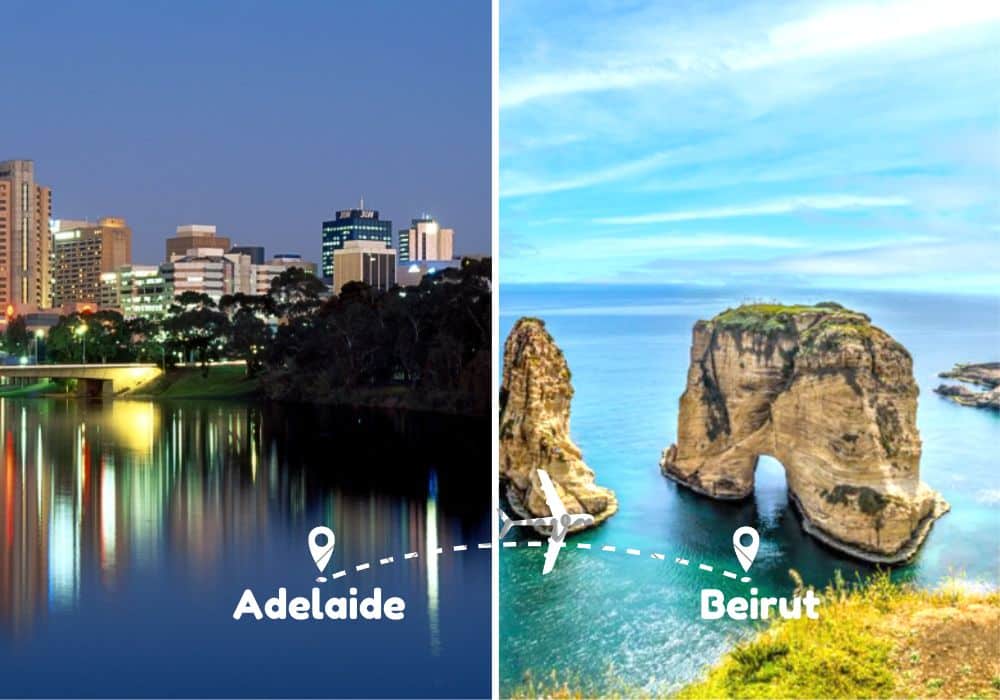
Adelaide Airport (ADL)
It is a compact, modern airport in Australia designed for efficiency. Adelaide Airport serves more than 8 million passengers annually in peak years. It operates from a single integrated terminal for both domestic and international flights, making transfers simple. The airport is only 6 kilometres from Adelaide’s city centre.
Regional airports in South Australia include Whyalla, Port Lincoln, and Mount Gambier, all of which provide vital regional connectivity.
It combines domestic and international services in a single, easy-to-navigate terminal.
Major Airlines and Connectivity: Serves as a focus city for Qantas and a base for Virgin Australia and Rex Airlines. It offers direct international flights to key hubs like Singapore, Kuala Lumpur, and Doha, connecting passengers onwards to Europe and Asia. Domestically, it connects to all major Australian cities.
Lounges, Shops & Basic Needs: Features the Qantas Club, Virgin Australia Lounge, and the Plaza Premium Lounge (open to all passengers for a fee). The lounges offer good views of the runway. The terminal has a great selection of South Australian produce and wine shops, alongside standard newsagents, a pharmacy, and fashion retailers like Cotton On.
Staff Friendliness: There is a dedicated children’s play area and excellent accessibility features. The airport also has a mini-museum showcasing South Australian history.
Airport to Destination:
- Bus: The JetExpress and JetBus services (routes J1, J2, J8) run frequently between the airport and the city centre (approx. 30 minutes).
- Taxi/Ride-share: Taxi ranks and ride-share pick-up zones are located directly outside the arrivals area. The city centre is only a 15-20 minute drive.
- Car Rental: All major car rental companies have desks right in the arrivals hall.
Currency Exchange, Comfort and Staff Friendliness: Travelex has a desk in the arrivals area. Multiple ATMs are available before and after security. It’s a very comfortable airport with modern seating, plenty of natural light, and a relaxed atmosphere. It is easy to navigate and rarely feels overly chaotic. Most importantly, staff and volunteers are consistently praised for their friendliness and willingness to help, contributing to its award-winning reputation.
Planning to travel through one of Australia’s major airports but not sure where to start?
We help you choose the right airport, compare airlines, and secure the best available fares based on your travel dates and budget. Our team checks route options, baggage rules, stopovers, and transit times so you avoid last-minute surprises. We also guide you to the most convenient arrival airport based on your final destination in Australia.
Book now and let us arrange your next flight