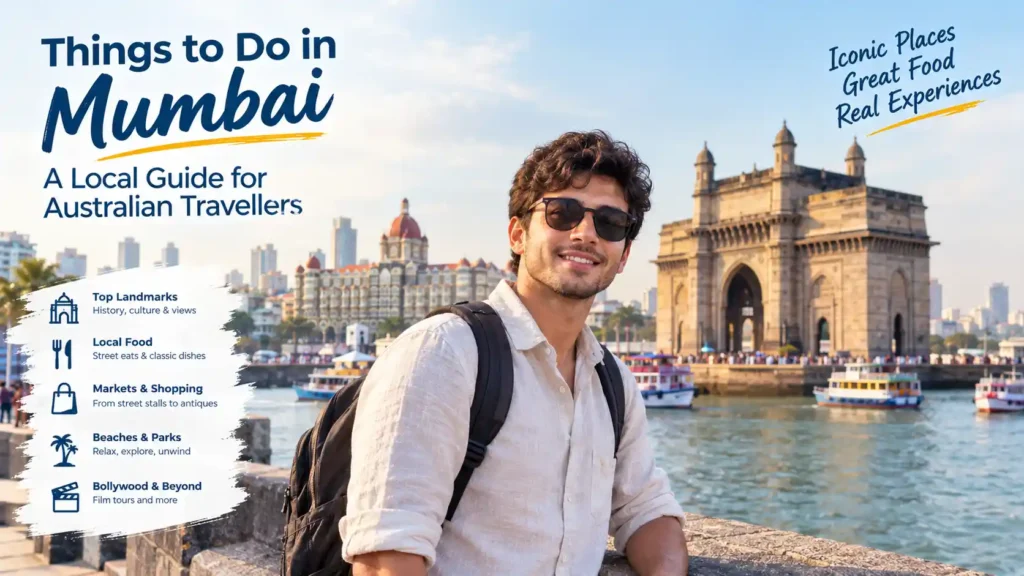
Things to Do in Mumbai: A Local Guide for Australian Travellers
Mumbai does not ease you in. The city hits with heat, colour, car horns and the smell of frying puri the moment you step out of the terminal. For Australian travellers used to Sydney or Melbourne pace, that first day can feel like sensory overload. Push past it. Mumbai rewards anyone willing to walk its footpaths, catch a local train, and sit down to eat where the queue is longest.
This guide covers the places and experiences worth your time, with a leaning toward what Australian visitors tend to enjoy and what often gets missed.
Why Mumbai is Worth the Trip
Mumbai is India’s financial capital, Bollywood’s home base, and the country’s busiest port, all stacked onto a thin strip of reclaimed islands. The result is a city of contrasts: Victorian-era arcades sitting next to glass towers, century-old dabbawalas delivering lunch tins across the same streets as food delivery scooters, fisherfolk pulling nets in on beaches a short drive from five-star hotels.
Most Australians arrive via Chhatrapati Shivaji Maharaj International Airport (BOM). Direct and one-stop options from Sydney, Melbourne, Brisbane, Perth, and Adelaide run through carriers like Singapore Airlines, Qantas, Air India, Malaysia Airlines, and Emirates.
Read more: Australia to India flight guide
Must-See Landmarks and Historic Sites
Gateway of India: The 26-metre basalt arch on the Apollo Bunder waterfront is where everyone starts. Built to mark the 1911 visit of King George V, it is now the city’s informal meeting point. Go at sunrise if you want it quiet, or in the evening when buskers and balloon sellers take over the plaza.
Chhatrapati Shivaji Maharaj Terminus (CSMT): Still called Victoria Terminus by many locals, this UNESCO-listed railway station is a working piece of history. Suburban trains move around three million people through here daily. Even if you are not catching a train, step inside to see the Gothic Revival ceilings.
Elephanta Caves: An hour-long ferry from the Gateway drops you on Elephanta Island, where rock-cut Hindu temples dating to the 5th century sit above the harbour. The three-faced Trimurti sculpture of Shiva is the headline piece. The caves are listed as a UNESCO World Heritage Site, with a visitor fee for international travellers and limited ferry hours (last return around 5:30 pm).
Haji Ali Dargah: A white marble shrine on a tidal islet, reached by a causeway that disappears at high tide. Dress modestly, remove shoes before entering, and check tide times before you go.
Read more: Best season to visit India guide
Experience Local Food Culture
Mumbai eats constantly, and the street food is a reason to visit on its own. A few things to try:
- Vada pav at a roadside stall in Dadar or Kurla, the city’s unofficial burger, a spiced potato fritter in a soft bun with chutneys
- Pav bhaji on Juhu or Chowpatty Beach as the sun drops
- Pani puri from a vendor you watch making them (hygiene matters more than fame)
- Bombay sandwich from a cart in Fort or Churchgate, cucumber, beetroot, boiled potato and green chutney between buttered white bread
- Thali at a Gujarati or South Indian restaurant such as Shree Thaker Bhojanalay or Mani’s Lunch Home
Sit-down options worth booking: Britannia & Co. (Parsi berry pulao), Trishna (butter garlic crab), and Bademiya (late-night kebabs behind the Taj). Vegetarians are well looked after everywhere, tell any waiter and they will steer you.
A tip for Aussie stomachs: give yourself a day of lighter eating to adjust, drink only sealed bottled or filtered water, and go easy on raw salads for the first few days.
Read more: India tourist visa for Australians
Markets, Shopping, and Street Life
Colaba Causeway is where most visitors start, a long strip of pavement stalls selling clothing, jewellery, leather goods, and souvenirs. Prices start high; haggling is expected and generally friendly.
Chor Bazaar (literally “thieves’ market”) in the Muslim quarter around Mutton Street sells antiques, vintage Bollywood posters, old brass, and camera gear. Go on a weekday morning when it is less packed.
Crawford Market (now Mahatma Jyotiba Phule Mandai) is a working wholesale market in a 19th-century heritage building. Fruit, spices, and household goods. It is loud, cramped and genuine.
Dharavi is one of Asia’s largest informal settlements, with a surprisingly productive economy around leather, pottery, and recycling. Organised walking tours led by residents (such as those run by Reality Tours) put a majority of their fee into local education and health programs. If you take one, go with a reputable operator rather than a random guide approaching you on the street.
Read more: Melbourne to Mumbai route page
Beaches, Parks, and Evening Walks
Mumbai’s beaches are not for swimming, currents and water quality rule that out, but the social scene is worth joining.
- Marine Drive is a 3-kilometre arc of promenade known locally as the Queen’s Necklace when its streetlights come on at dusk. Walk from Nariman Point to Chowpatty.
- Juhu Beach gets busy on weekend evenings with families, food carts, pony rides, and the occasional Bollywood sighting.
- Bandra Bandstand has a shaded walking path along the sea wall, popular with locals and a nice break from the city noise.
- Sanjay Gandhi National Park in the north has leopards, Kanheri Caves, and walking trails inside the city limits, rare for a metro of this size.
- Hanging Gardens and Kamala Nehru Park on Malabar Hill give views of Marine Drive from above.
Read more: Fly India from $50 Deposit
Bollywood and Film Studio Experiences
Mumbai is the Bollywood capital, and a studio tour is one of the few things you cannot really do anywhere else in India. Film City tours in Goregaon take you through outdoor sets, soundstages, and sometimes an active shoot. Book through an authorised operator; private cars that promise to “sneak you in” are best avoided.
If you catch a current release at an Imax or single-screen cinema like Regal in Colaba or Liberty in Marine Lines, you will see what going to the movies means in India, interval breaks, audience reactions, and song numbers that get applause.
Read more: Sydney to Mumbai route page
Day Trips Beyond the City
Two or three days in Mumbai is enough for most first-time visitors. If you have more, consider:
- Matheran (around 90 km east), a car-free hill station with red-earth trails and old British bungalows
- Lonavala and Khandala, monsoon-season waterfalls and chikki (brittle) shops, two hours by car or train
- Alibag, a ferry across the harbour to a quieter stretch of beach, popular with Mumbaikars on weekends
Read more: Book Now, Pay Later
Practical Tips for First-Time Visitors
- Getting around: Prepaid Uber and Ola work well. The suburban rail is cheap and fast but crowded, avoid peak hours and keep valuables tucked away. Black-and-yellow taxis use meters; auto-rickshaws run north of Bandra only.
- Best time to visit: November to February is cooler and dry. The monsoon (June to September) is dramatic but limits what you can do outdoors.
- Visa: Australian passport holders need a visa or e-Visa before travel. Apply at least four to six weeks ahead for peak season.
- Payments: Carry some cash in small notes for stalls and auto-rickshaws, but UPI and card payments are accepted almost everywhere else.
- Dress code: Modest cover is appreciated at temples and mosques. Shoulders and knees covered is a safe default.
Read more: Mumbai Travel Guide
FAQs
How many days do you need in Mumbai?
Three full days covers the major landmarks, a food tour, and one half-day for shopping or Elephanta. Four or five lets you add a day trip to Matheran or Alibag without rushing.
Is Mumbai safe for Australian tourists?
Mumbai is one of the safer large Indian cities for visitors. Standard precautions apply, watch your bag in crowded markets and on trains, use registered taxis or ride-share apps after dark, and keep a photocopy of your passport separate from the original.
What is the best area to stay in for first-time visitors?
Colaba and Fort are the most convenient for sightseeing, with heritage hotels and boutique guesthouses. Bandra and Juhu suit travellers who want a mix of restaurants and beach access. Bandra Kurla Complex is better for business visitors.
Final Word
Mumbai is not polished. It is loud, hot, and takes a day or two to click. Give it that time, follow where locals eat and walk, and you will leave with a city under your skin that no five-day itinerary quite captures.