Melbourne to Cairo Flight Guide: Airlines, Prices & Tips
You’ve decided on Egypt. Maybe it’s the pyramids at Giza, a Nile cruise, or just the pull of somewhere genuinely ancient. Whatever the reason, getting from Melbourne to Cairo takes a bit of planning, because this is not a short trip.
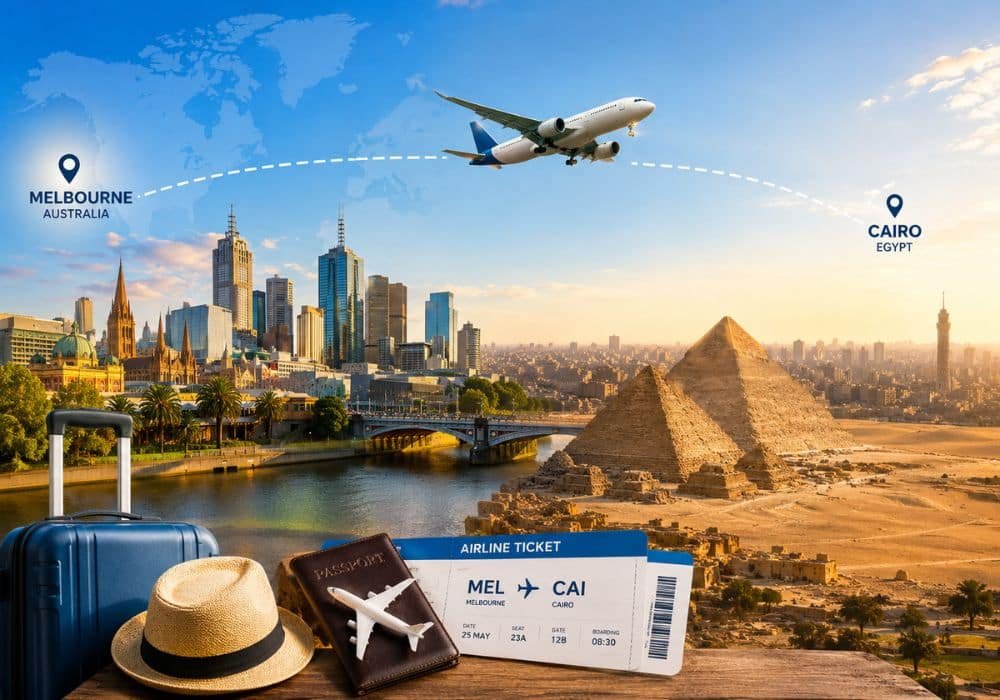
The distance between Melbourne and Cairo is roughly 13,940 kilometres, and there are no non-stop flights on this route. Every ticket you’ll find involves at least one stop. That’s fine, and honestly some of those layover cities are worth a few hours themselves. But it does mean your travel time, comfort, and total price all depend heavily on which airline and hub you pick.
How Long Does the Flight Take?
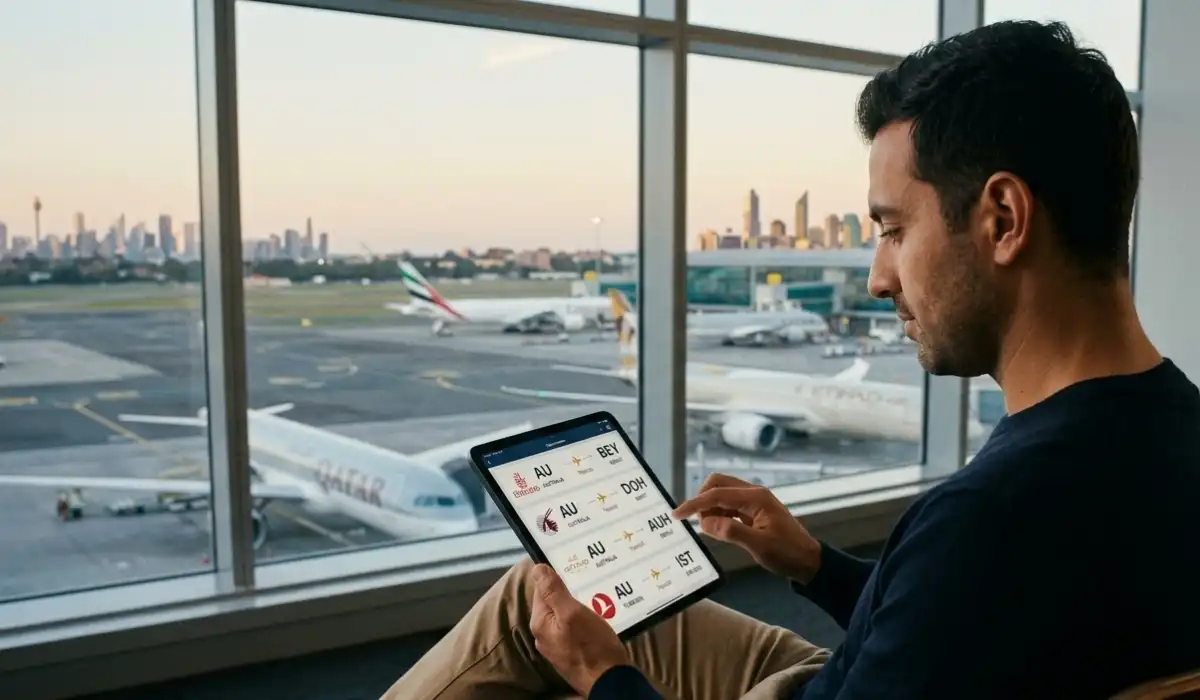
The fastest option from Melbourne to Cairo is Etihad Airways via Abu Dhabi, at around 19 hours and 50 minutes total. Emirates via Dubai takes about 20 hours, and Qatar Airways through Doha comes in at roughly 20 hours and 25 minutes.
Those numbers assume a tight connection. If you’re going for the budget route through Chinese carriers, the story changes.
Depending on the airline and layover, total travel time can stretch anywhere from 19 hours 30 minutes to well over 56 hours if you choose a long stopover itinerary. Worth knowing before you click “book.”
We suggest:
When comparing flights, always check the total journey time, not just the airfare. A ticket that looks $300 cheaper might add 15 hours to your trip each way. That’s not a saving for most travellers
Which Airlines Fly Melbourne to Cairo?
The Middle Eastern Carriers
These are the most popular options for good reason. Etihad, Emirates, and Qatar all offer solid one-stop connections with competitive flight times.
Etihad offers 3 to 4 flights per day from Melbourne with a stop in Abu Dhabi, while Emirates runs up to 7 flights per day via Dubai. That frequency matters if your plans shift or a connection gets delayed.
Qatar Airways is worth a look if you want strong in-flight service. Hamad International Airport in Doha is consistently ranked among the best airports in the world, so it’s a solid place to spend a layover too.
The Budget Route Through Asia
China Eastern is the top choice among Australians searching for cheaper fares, with about 38% of travellers on this route opting for this airline. The trade-off is a longer journey via Shanghai Pudong Airport, and the total travel time can balloon depending on your connection.
Sichuan Airlines and Hainan Airlines are two other Asian carriers that show up when prices are the priority. They’re not household names in Australia, but they do operate the route and can offer some of the lowest fares available.
We suggest:
If you book with an Asian carrier like China Eastern, confirm your checked baggage allowance for each segment of the journey separately.
On connecting routes, the allowance for the Australia-to-Shanghai leg can differ from the Shanghai-to-Cairo leg, and travellers get caught out at check-in more than they expect. Always read the fare conditions before you finalise.
What to Expect on Price
Prices on this route move around quite a bit.
Currently, April is one of the cheaper months to book, with average round-trip fares sitting around AUD $778. September sits at the other end of the scale, with averages pushing close to AUD $2,939.
That’s a massive range for the same route, so timing your search genuinely matters.
A Rough Price Breakdown by Airline
Airline | Approx. Round Trip (AUD) | Layover City |
China Eastern | From $822 | Shanghai |
Gulf Air | From $767 | Bahrain |
Turkish Airlines | From $1,027 | Istanbul |
Qatar Airways | From $1,611 | Doha |
Emirates | From $1,917 | Dubai |
Prices sourced from recent fare data and will vary by travel date.
When to Book
Booking around 81 to 86 days in advance is generally the sweet spot for getting the best price on this route. Leave it much closer to departure and you’ll almost certainly pay more.
Flying on a Thursday can save you up to 16% compared to a Sunday, based on data from the Airlines Reporting Corporation. That’s the cheapest day to depart. Separately, booking your ticket on a Sunday tends to land 6 to 13% cheaper than booking on a Friday, which is the day-of-booking pattern, not the day you fly.
These aren’t massive savings on their own, but on a long-haul like this, they add up.
We suggest:
Set a price alert at least three months before your travel date and watch for a drop mid-week. On this route, a two-to-three week window of lower pricing often appears around the 80-day-out mark. If you wait until six weeks out, the cheaper fares on the better-regarded airlines are usually gone.
Visa and Entry for Australian Passport Holders
This is straightforward, which is a relief.
Australians have two options. You can apply for an e-visa online before you leave, or get a visa on arrival at Cairo International Airport. Both cost USD $25 for a single entry and allow a stay of up to 30 days.
The e-visa takes 3 to 7 business days to process and arrives by email. The visa on arrival is instant, but you’ll need to queue and have USD cash on hand.
The smarter move is the e-visa. Apply through the official Egyptian government e-visa portal before you leave. You print it out, carry it with you, and skip the cash scramble at the airport.
Your Australian passport must be valid for at least 6 months beyond your intended stay, and you’ll need at least two blank pages available for stamps. Double-check this before you travel.
We Suggest:
Apply for the e-visa through the official portal at least two weeks before you fly. Many Australians assume the visa-on-arrival queue is fast. At times it is.
But when several international flights land at once at Cairo, that kiosk line grows. With the e-visa printed and in hand, you skip the queue entirely and go straight to immigration. It is genuinely the easier option.
A common problem that catches Australian travellers off guard: if you do use a visa on arrival, payment at the airport kiosk must be in USD, Euro, or GBP cash. Card payment is not accepted. Sorting this out while jet-lagged after 20 hours in the air is not the experience you want.
We Suggest:
Get around USD $40-$50 in cash before you leave Melbourne, even if you plan to use the e-visa. Exchange rates inside airports, especially in transit hubs, are rarely worth it. Having clean USD notes on hand also covers the visa-on-arrival fee, tipping, and any incidental cash costs in Egypt, where cards are not always accepted.
Also worth noting: the Australian Government’s Smartraveller website advises travellers to exercise a high degree of caution in Egypt due to the risk of terrorism, particularly in North Sinai. Cairo itself is a different story, and millions of tourists visit without issue, but it’s worth reading the full Smartraveller advisory before you go.
Before You Fly
Pick your hub city with purpose. If you’ve never been to Dubai or Doha, a 4 to 6 hour layover is a decent opportunity to see a bit of the city. Some airports offer free transit tours. Emirates and Qatar Airways both have lounges worth using if you’re flying premium.
Don’t underestimate the return journey. Eastbound back to Melbourne can feel longer. A late-night departure from Cairo is common, which means arriving back into Tullamarine in the early morning. Factor that into any leave arrangements.
We suggest:
Watch checked baggage allowances carefully. Budget Asian carriers often have significantly lower baggage inclusions compared to Etihad or Emirates. If you’re planning to shop in Cairo’s Khan el-Khalili bazaar, and you will, this matters.
The honest summary is this. If comfort and time matter most, go with a Middle Eastern carrier and a tight connection through Abu Dhabi or Dubai. If budget is the priority and you’re flexible with travel time, China Eastern or similar will get you there for a lot less.
Check Smartraveller, sort your e-visa a few weeks out, and lock in your booking at least two to three months before you want to fly. The price gap between booking early and leaving it late on this route is real enough to be worth the forward planning.